Rue du Bac
The Chapel of Our Lady of the Miraculous Medal, located at 140 Rue du Bac in Paris, was built in
1815 and dedicated to the Sacred Heart of Jesus. In 1830, this chapel was forever marked by a
series of apparitions of the Blessed Virgin Mary to a young novice of the Daughters of Charity,
Sister Catherine Labouré. These events led to the creation of the Miraculous Medal, one of the most
widely distributed sacramentals in Christian history.
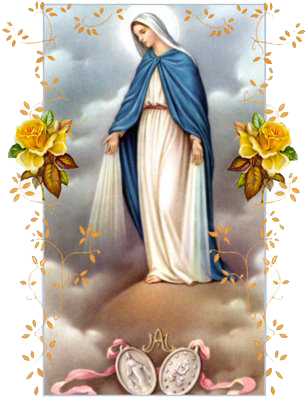
In 1830, at the Chapel on Rue du Bac in Paris, the Blessed Virgin Mary appeared three times to Sister
Catherine Labouré, a young Daughter of Charity. These apparitions led to the creation of the Miraculous
Medal, a powerful sign of faith, grace, and hope.
On July 18, Mary spoke to Catherine with maternal tenderness and promised abundant graces to all who would come to the altar with trust.
On
November 27, Mary revealed the design of the Miraculous Medal, showing herself standing on the
globe, crushing the serpent, with rays of grace flowing from her hands. Around the image appeared
the prayer: “O Mary conceived without sin, pray for us who have recourse to you.”
Mary asked that this medal be made and worn with confidence, promising great spiritual blessings.
First distributed in 1832, the medal quickly became known as miraculous due to countless healings,
conversions, and protections. By the time of Sister Catherine’s death in 1876, over a billion
medals had spread throughout the world.
The Miraculous Medal reminds us of Mary’s loving
intercession, the victory of grace over evil, and the call to trust in God and walk the path of
love with Jesus and Mary.
La Salette
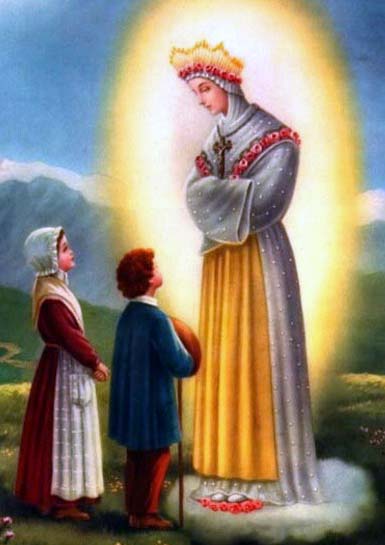
Our Lady of La Salette is a title given to the Blessed Virgin Mary, based on an apparition that
occurred in 1846 in La Salette-Fallavaux, a small village in the French Alps. According to accounts,
two children, Maximin Giraud and Mélanie Calvat, witnessed Mary weeping on the mountain and
delivering a message to them. In her message, Mary called for repentance, conversion, and a
return to prayer and penance. She also warned of the consequences of ignoring God, including
famine, war, and persecution. The apparition conveyed a sense of urgency and compassion,
highlighting the need for both personal and communal spiritual renewal. This message resonated
deeply with the local people and beyond, inspiring devotion and reverence toward Mary as a guide
and intercessor in times of difficulty and moral challenge. In 1851, the Catholic Church formally
approved the apparition, recognizing its authenticity and spiritual significance, which led to the
establishment of a shrine on the site where the vision occurred.
The Shrine of Our Lady of La Salette, located amidst the stunning landscape of the French Alps,
has become a major pilgrimage destination for Catholics from around the world. Pilgrims visit the
shrine to pray, attend Mass, and take part in religious ceremonies and spiritual retreats. The
site emphasizes the messages of Mary—holiness, repentance, and guidance—encouraging visitors to
deepen their faith and reflect on their spiritual lives. Beyond its religious functions, the shrine
also serves as a center of community, bringing together people in a shared experience of devotion,
reflection, and hope. Shrines like La Salette play a crucial role in Catholic spirituality,
providing spaces where individuals can encounter God, seek comfort in times of difficulty, and be
reminded of the importance of living a life rooted in faith, prayer, and moral responsibility.
Through its history, message, and ongoing ministry, Our Lady of La Salette continues to inspire
devotion, calling the faithful toward spiritual renewal and a closer relationship with God.
Fatima
Throughout history, God has sent prophets to guide His people back to Him. In the 20th century, He
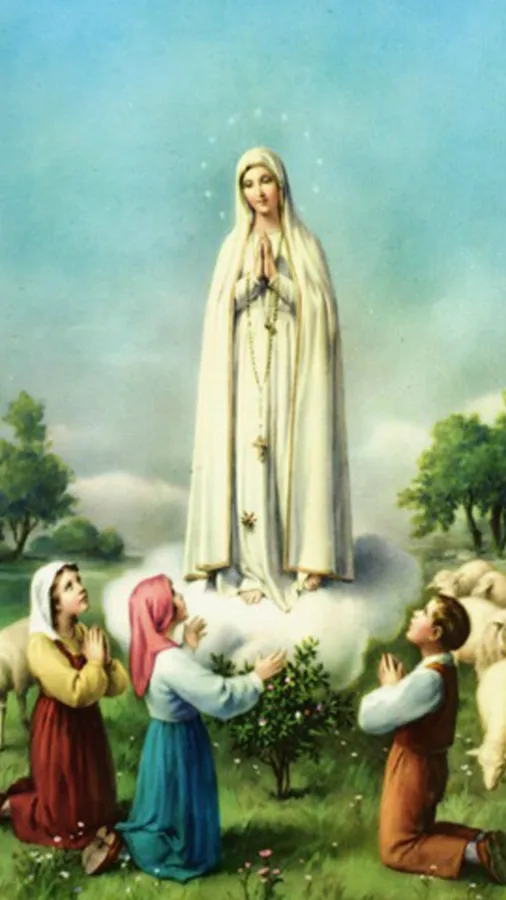
sent His Mother, the Blessed Virgin Mary, to Fatima, Portugal, in 1917. Mary appeared to three
children—Lucia dos Santos and her cousins Francisco and Jacinta Marto—to call the world to repentance,
prayer, and sacrifice, warning of wars, famine, and the persecution of the Church. Through the Immaculate
Heart of Mary, God offered humanity a path of hope and salvation, inviting all to turn away from sin and
seek peace.
Before the Marian apparitions, an Angel appeared to the children, teaching them prayers, the importance of
sacrifice, and devotion to the Sacred Hearts of Jesus and Mary. In 1917, Mary appeared six times at Cova
da Iria, urging the children to pray the Rosary daily, make sacrifices for sinners, and consecrate themselves
to God. She revealed visions of Hell, warned of the consequences of unrepented sin, and emphasized devotion to
Her Immaculate Heart as a means to bring peace to the world, prevent wars, and convert Russia. Mary promised
miracles to strengthen faith and requested the building of a chapel in her honor. The final apparition
in October 1917 was marked by the “Miracle of the Sun,” witnessed by thousands, demonstrating the truth
of her message.
Following the apparitions, Francisco and Jacinta offered their lives in prayer and penance, dying young after
heroic suffering, while Lucia became a Carmelite nun, spreading devotion to the Immaculate Heart of Mary.
She revealed parts of the Fatima secret to the Church, and later, the Pope consecrated the world to Mary
’s Immaculate Heart, fulfilling her requests. The Fatima message emphasizes God’s mercy, the need for
reparation, prayer, daily duty, and devotion, including the Rosary, the Five First Saturdays, and
wearing the Brown Scapular. The apparitions call all people to conversion, holiness, and the salvation
of souls, reminding humanity of God’s patient love and desire for peace.
Lourdes
On December 8, 1854, Pope Pius IX solemnly proclaimed the dogma of the Immaculate Conception in the
apostolic constitution Ineffabilis Deus, declaring that Mary was conceived without sin. Just over
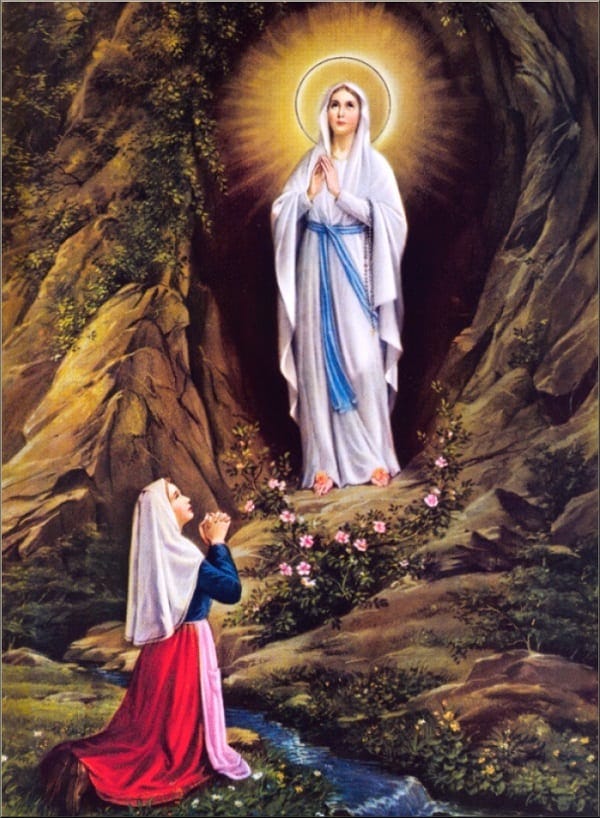
three years later, on February 11, 1858, the Blessed Virgin Mary appeared to a young girl named
Bernadette Soubirous in Lourdes, France, beginning a series of visions that would inspire millions.
During one of the apparitions on March 25, Mary identified herself as “the Immaculate Conception,”
confirming the recently proclaimed dogma and highlighting her unique role in God’s plan of salvation.
Bernadette came from a poor family and was a sickly child, with only a basic knowledge of Catholic
prayers, including the Our Father, the Hail Mary, the Creed, and the prayer of the Miraculous Medal:
“O Mary conceived without sin.” In her testimony, Bernadette described seeing “something white in the
shape of a girl,” using the local dialect word aquero. She recounted that the lady was a young girl with
a rosary over her arm, dressed in a white robe with a blue sash, a white veil, and yellow roses on her
feet. The apparition spoke to Bernadette respectfully, using the polite form of address, treating the
humble child with dignity and grace.
Through Bernadette, Mary revitalized the faith of countless people. Pilgrims began traveling to Lourdes
from all over France and the world, seeking spiritual healing and comfort. In 1862, Church authorities
officially recognized the authenticity of the apparitions and approved the devotion to Our Lady of
Lourdes in the diocese. The Feast of Our Lady of Lourdes was later extended worldwide in 1907. Today,
Lourdes remains a major pilgrimage site, where the faithful continue to seek Mary’s intercession,
inspired by her message of purity, humility, and devotion to God.
Guadalupe
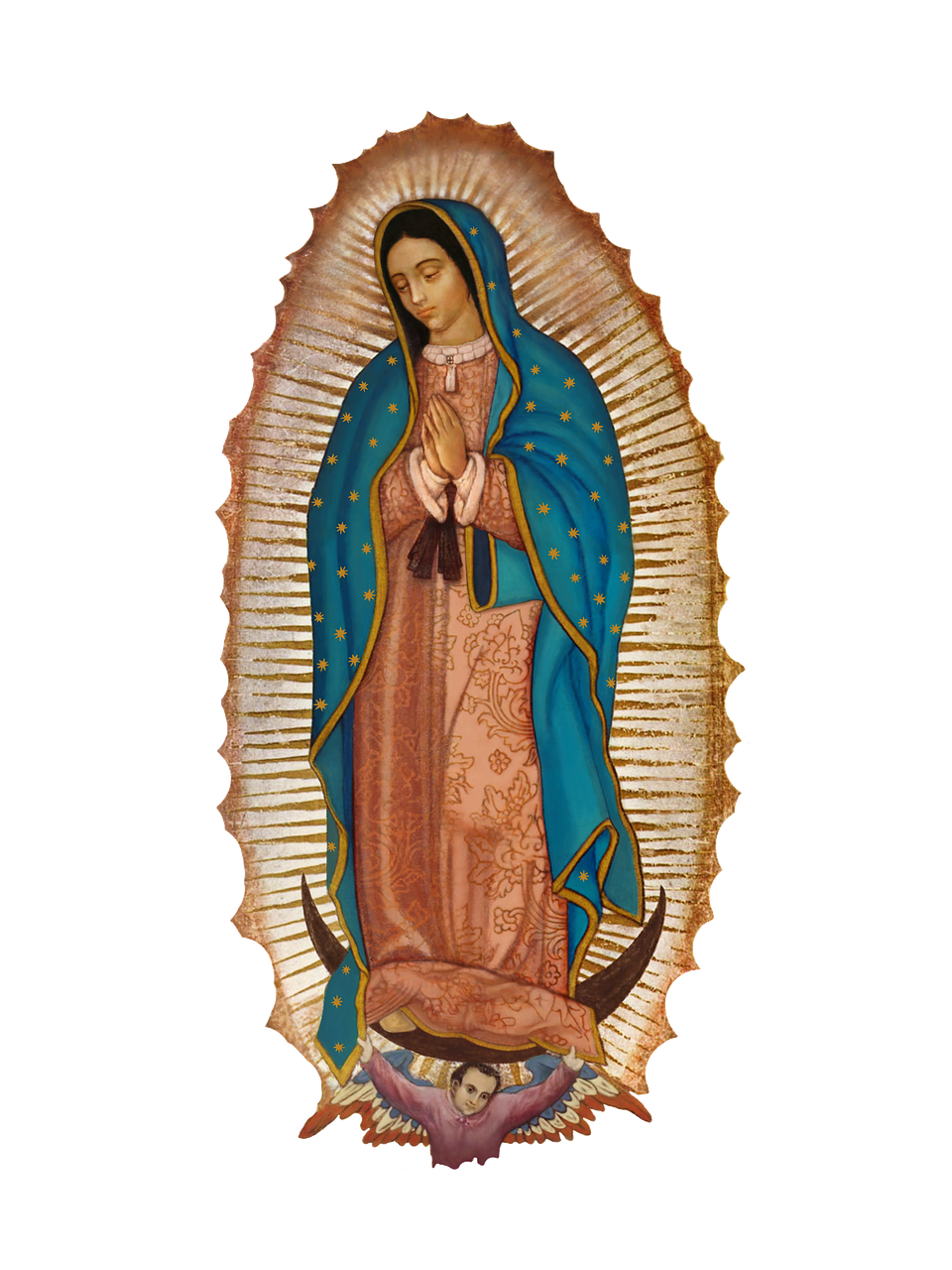
The feast in honor of Our Lady of Guadalupe dates back to the 16th century and tells the story of Juan
Diego, a humble and poor 57-year-old widower who lived in a small village near Mexico City. Baptized
as Cuauhtlatohuac, he had been given the Christian name Juan Diego, and although he was a simple man
with limited knowledge of formal prayers, he faithfully attended Mass and lived a life of devotion.
On the morning of Saturday, December 9, 1531, as he was walking to a nearby barrio to participate in
Mass in honor of Our Lady, he heard the most beautiful music, reminiscent of birds singing in the early
morning. Looking up, he saw a radiant cloud descending on the hill of Tepeyac, and within it stood a
young Indian maiden dressed in the attire of an Aztec princess, shining with a light that was both
gentle and divine.
The Lady spoke to Juan in his native language, Nahuatl, calling him by name and sending him to Bishop Juan
de Zumarraga, a Franciscan prelate, with a request that a chapel be built on the site of her appearance.
Although Juan obeyed, the bishop asked for a sign to confirm the authenticity of this extraordinary
message. Around this time, Juan’s uncle became seriously ill, and out of concern, Juan tried to avoid
the Lady. However, she sought him out, reassured him that his uncle would recover, and gave him roses,
miraculously blooming in December, to carry in his tilma as proof for the bishop.
On December 12, when Juan Diego opened his tilma before the bishop, the roses fell to the ground,
and to everyone’s amazement, an image of Mary appeared on the fabric exactly as she had appeared on
the hill of Tepeyac. The bishop, overwhelmed with awe, knelt before the miraculous image and
recognized it as a true sign from Heaven. This event confirmed the Lady’s request for a chapel
and marked the beginning of an enduring devotion that continues to inspire millions of people from
all over the world.
The story of Guadalupe reminds the faithful that God’s love and mercy extend to everyone, regardless of
status or wealth. By choosing a humble and poor man to communicate her message, Mary showed that God
often works through the simplest of people to accomplish His plan. Today, the Basilica of Our Lady of
Guadalupe in Mexico City stands as one of the most visited pilgrimage sites in the world, a symbol of
faith, hope, and maternal care. The feast of Our Lady of Guadalupe continues to celebrate Mary’s love,
her intercession, and the enduring message of God’s closeness to His people.